Allow me to take you back to a rainy day in London this past spring. I made the mistake of checking out of my hotel early to meet an acquaintance at the TATE modern. The mistake being the TATE, along with almost every London museum except the V&A, doesn’t allow for any luggage bigger than a carry-on at coat check. This was a loss on two fronts: one I so desperately wanted to see the Tracey Emin exhibit and two, I had a meeting I was late for.
Luck was on my side because I could still camp out in the cafe (pro tip if you find yourself seeking shelter with bags) and double luck that the English gentleman I was meeting was just that– he insisted on me seeing this exhibit hell or high water and gave me his member pass while watching my bags. Angels do exist.
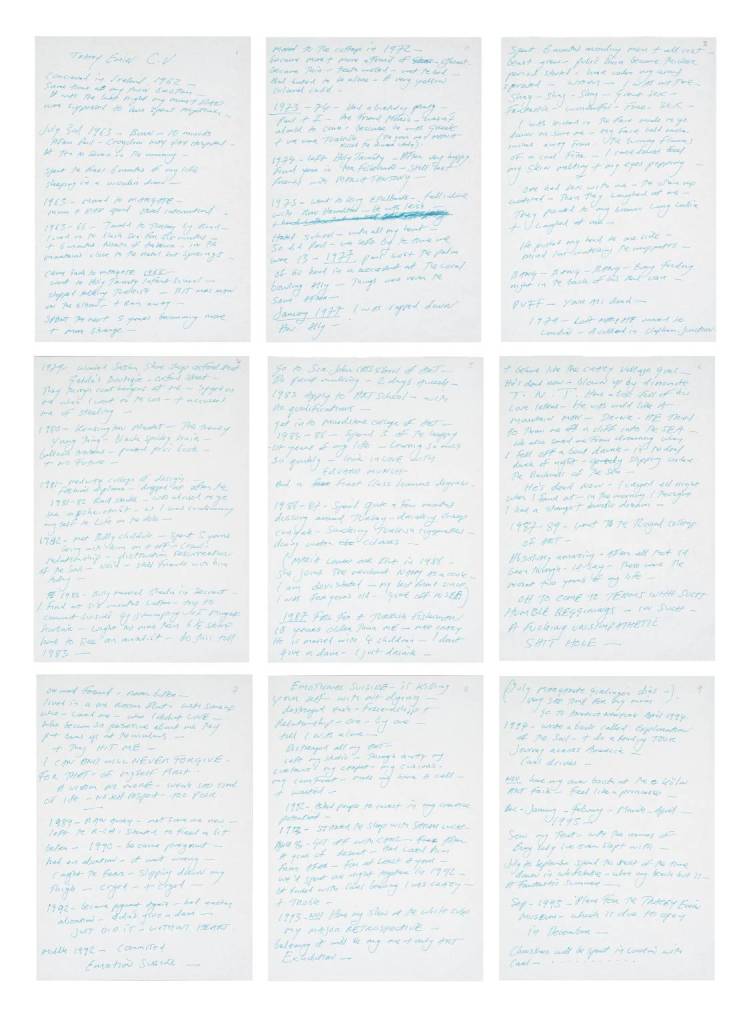
The exhibit was as emotionally eviscerating to view as I imagine the lived experience of the artist to create it. It’s interesting to me how people, especially creatives, corporealize strong emotions such as pain. Tracey Emin is a master at this, which feels sad to say. Truly ahead of her time which adds to the depth of her work, one can only imagine the isolation she felt during its execution and faith to continue it would find the right audience in time. TATE did an incredible job capturing the evolution she went through, of all the pieces her handwriting and letters effected me most. Something about handwriting, it is so deeply personal, a thumbprint you can’t run from.
Back in the cafe, I couldn’t have had better company to download emotion, life, work and art with– Dr. Hughes, a behavioural scientist, Psychiatrist, and CEO of a branding agency rooted in psychology. Did I mention he moonlights as an art dealer?
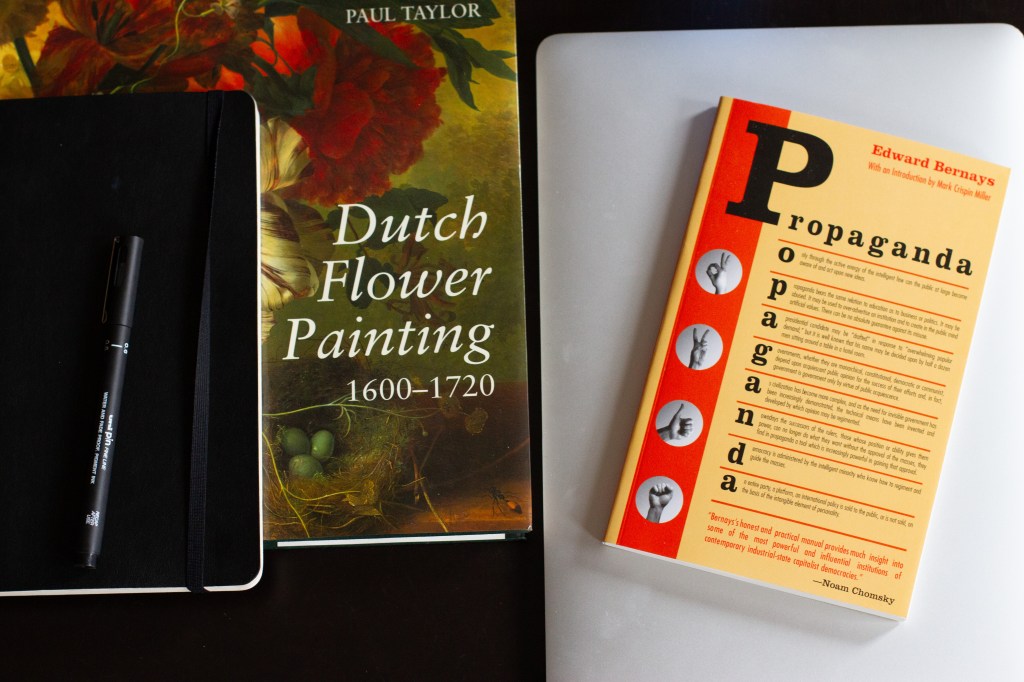
Amidst swirling conversation of language and translation via Proust, morals and metaphor via Mikhail Bulgakov he reminded me of Edward Bernays. Widely regarded as “Father of Public Relations” I was prompted to read his book, “Propaganda”. Relative to the Freuds, knew the potency of psychology and tapping into a movement vs. product marketing. And while he didn’t necessarily use his powers for good, see American Tobacco Company use case, he was perhaps the first to truly tap into the market under the guise of influence. Selling movement and associative value rather than obvious resolution of product benefit. Highly effective, and why “influencer” marketing is the wildfire that can’t be put out. A construction for the masses.
“Universal literacy was supposed to educate the common man to control his environment. Once he could read and write he would have a mind fit to rule. So ran the democratic doctrine. But instead of a mind, universal literacy has given him rubber stamps, rubber stamps inked with advertising slogans, with editorials, with published scientific data, with the trivialities of the tabloids and the platitudes of history, but quite innocent of original thought. Each man’s rubber stamps are the duplicates of millions of others, so that when those millions are exposed to the same stimuli, all receive identical imprints. It may seem an exaggeration to say that the American public gets most of its ideas in this wholesale fashion. The mechanism by which ideas are disseminated on a large scale is propaganda, in the broad sense of an organized effort to spread a particular belief or doctrine.” -Edward Bernays
Considering the above through the accelerating engine of AI, the term “wholesale fashion” couldn’t be any more on the nose.
What do you think?
 Library of Muses
Leave a comment